






Choose media wall panels around the way you watch television, the furniture you already own and the space the wall needs to serve. A measured panelled section can give a TV a considered backdrop without taking over the living room. Start with the screen and storage layout, then choose the finish.
Warm timber tones and textured surfaces offer useful inspiration. The 2026 Houzz UK Emerging Trends Report identifies growing interest in dark wood and tactile interiors. For a TV wall, our approach is to keep that texture controlled so the room still feels comfortable when the screen is switched off.
Start with your viewing position
Sit where you usually watch television and mark the proposed screen outline on the wall using a method that will not damage the existing finish. Check the view from the other seats too. The screen position should suit comfortable everyday viewing before it is adjusted to line up with a decorative pattern.
- Draw the actual screen dimensions. The diagonal size on the box does not tell you its width, height or the space needed around it. Include the manufacturer's requirements and the selected mounting arrangement.
- Add the cabinet, speakers and other equipment. Mark their outlines alongside the screen so you can see whether the whole composition feels balanced.
- Check the room from the doorway. A large feature can look different from the sofa and from the route through the room. Allow enough plain wall around a busy composition.
Choose how much wall to cover
A full-width treatment gives the whole wall one material identity. It works best when the room can accommodate a substantial feature and you have planned where the panels meet the corners. A smaller central section makes the television and cabinet read as a single group, with painted wall left on either side.
A third option is an offset panelled strip beside the screen. This can balance a low cabinet or shelving arrangement without surrounding the television with pattern. Make its position deliberate: align it with a furniture edge or another clear architectural line rather than leaving an accidental-looking sliver of bare wall.
Before ordering, sketch all three options to scale. Put the panel joins on the drawing too. A design that looks symmetrical as a rectangle may become awkward once it is divided into individual pieces.
Compare timber tone and painted relief
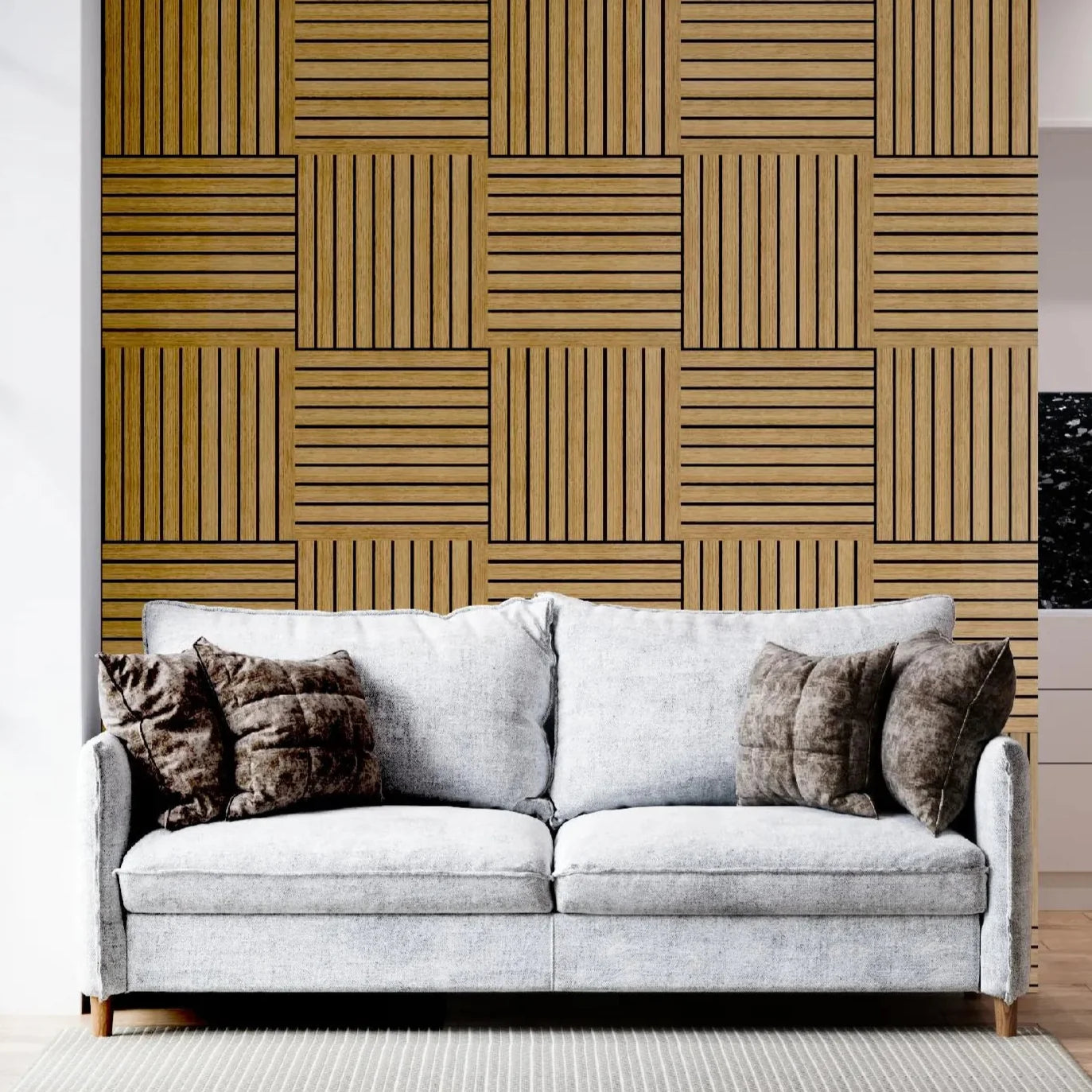
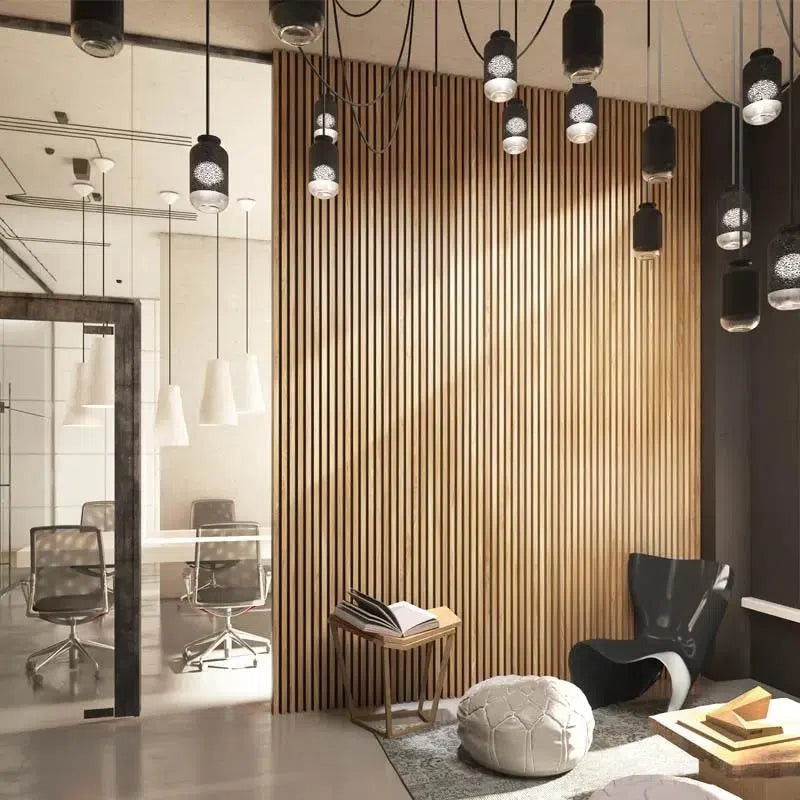
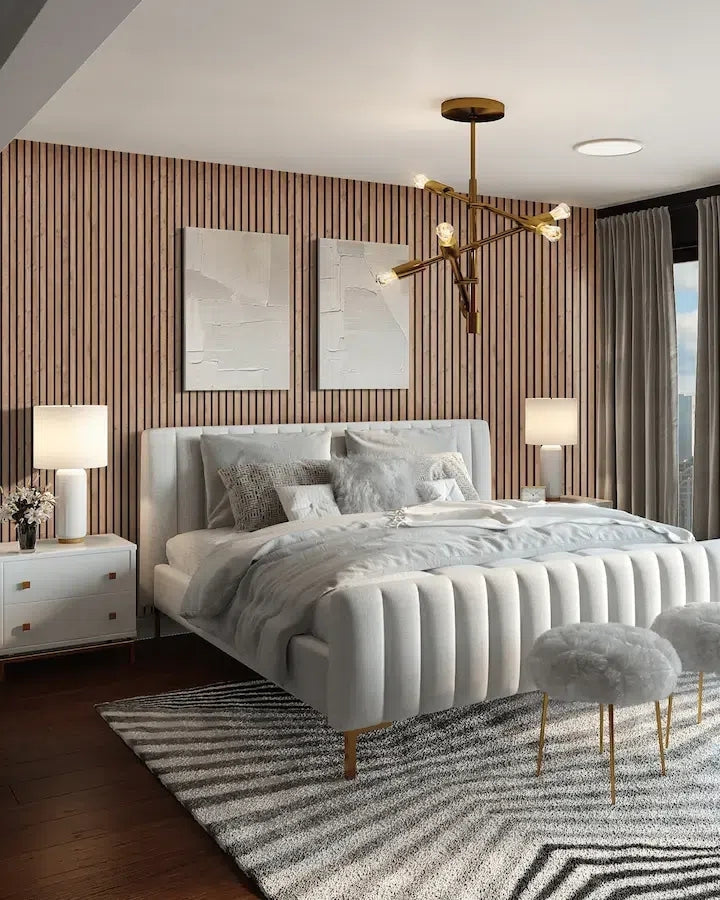
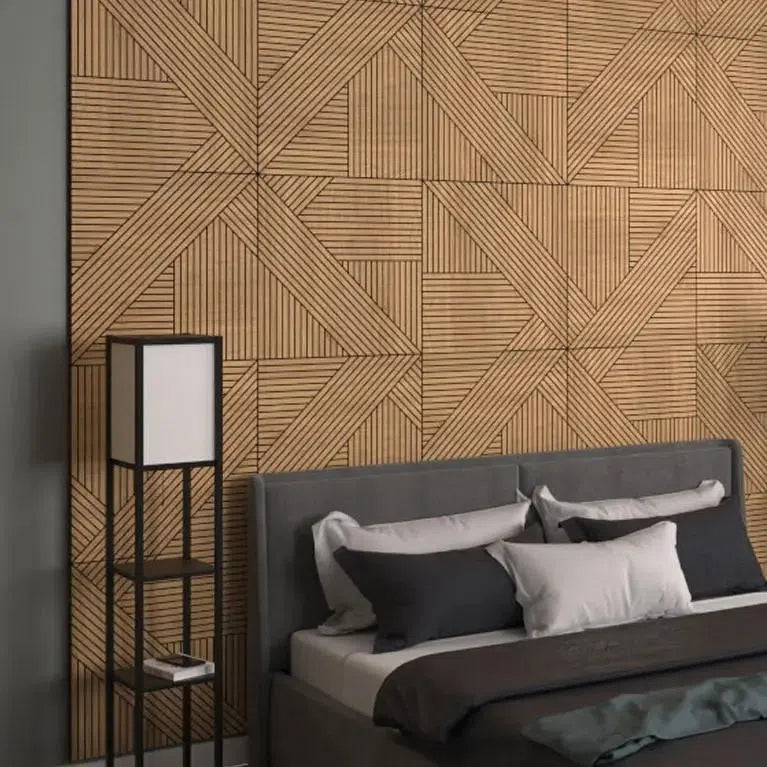
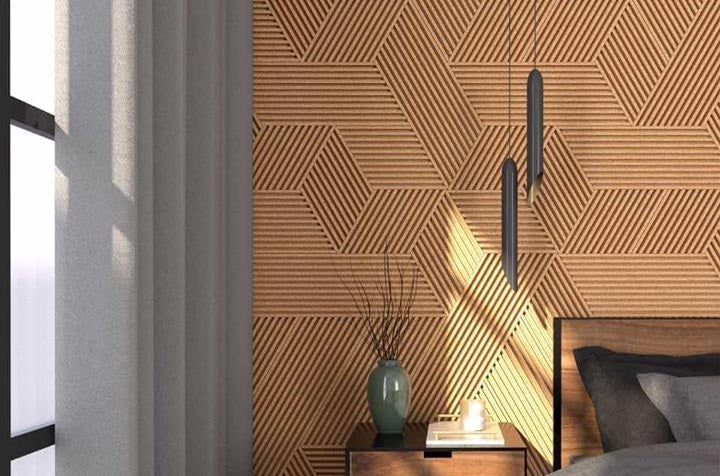
Walnut Acoustic Wood Slat Wall Panel brings a dark brown wood grain to the scheme. The listing specifies MDF with a real veneer finish and felt backing, in a 240 × 60 cm format with a 17 mm thickness. Use its timber tone as a starting point when comparing the floor, cabinet and nearby shelving.
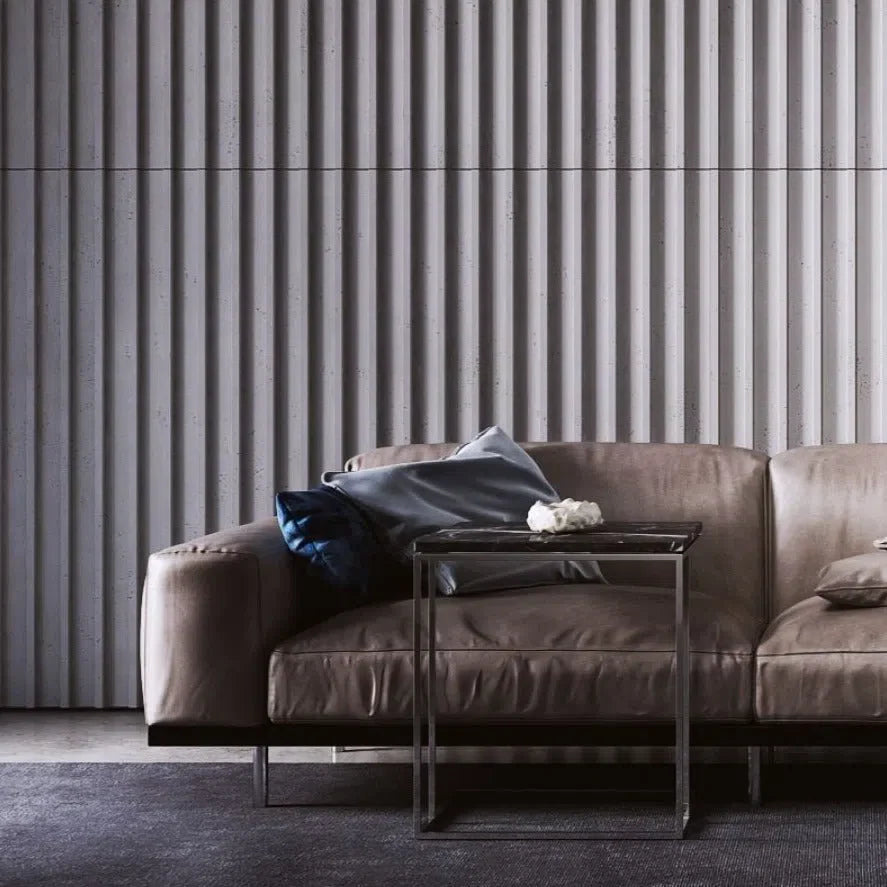
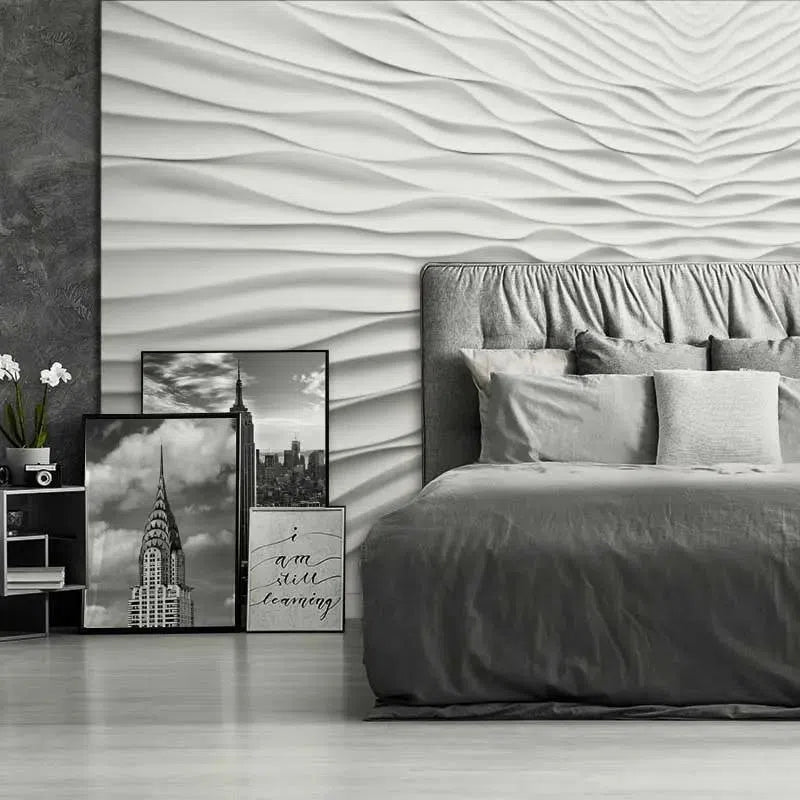
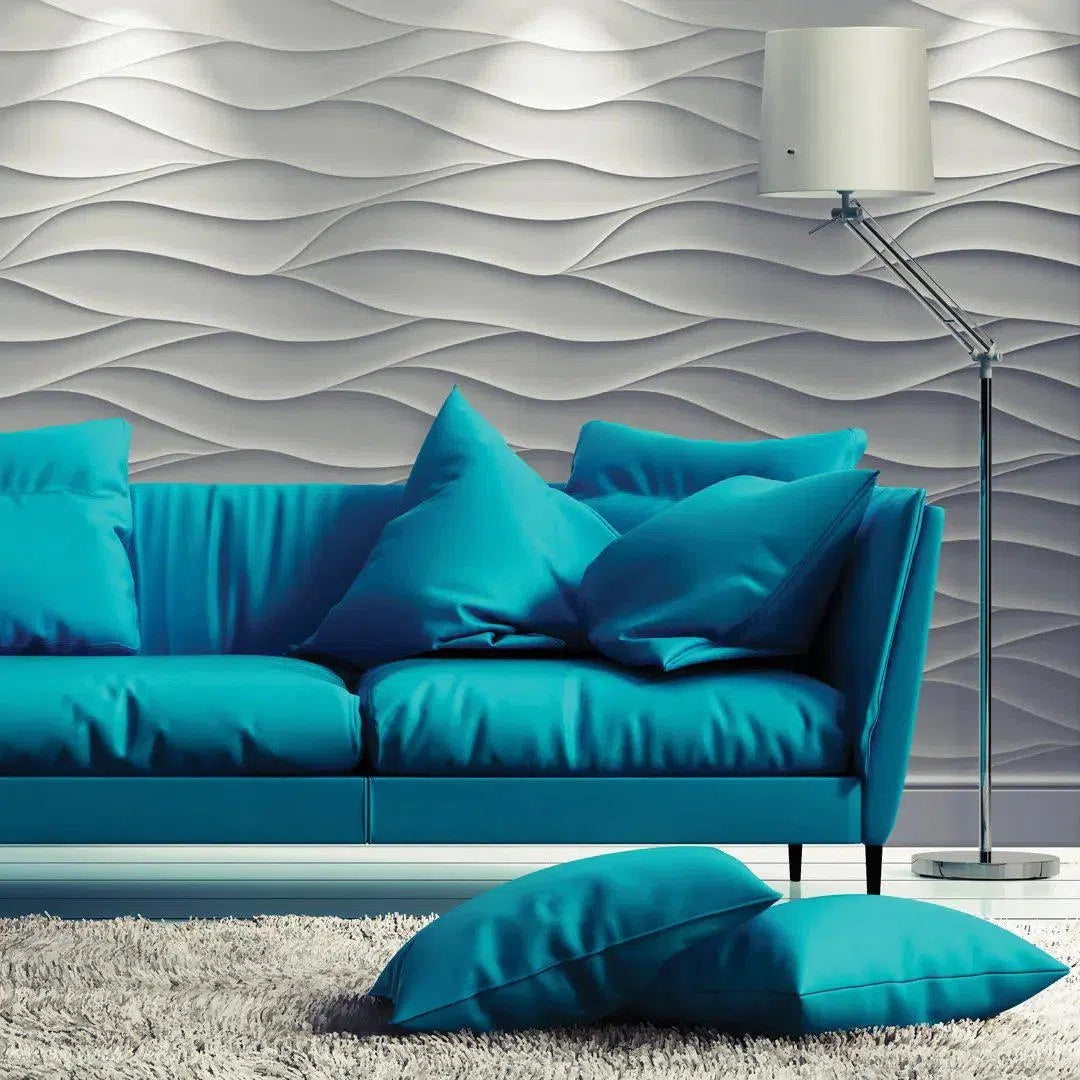
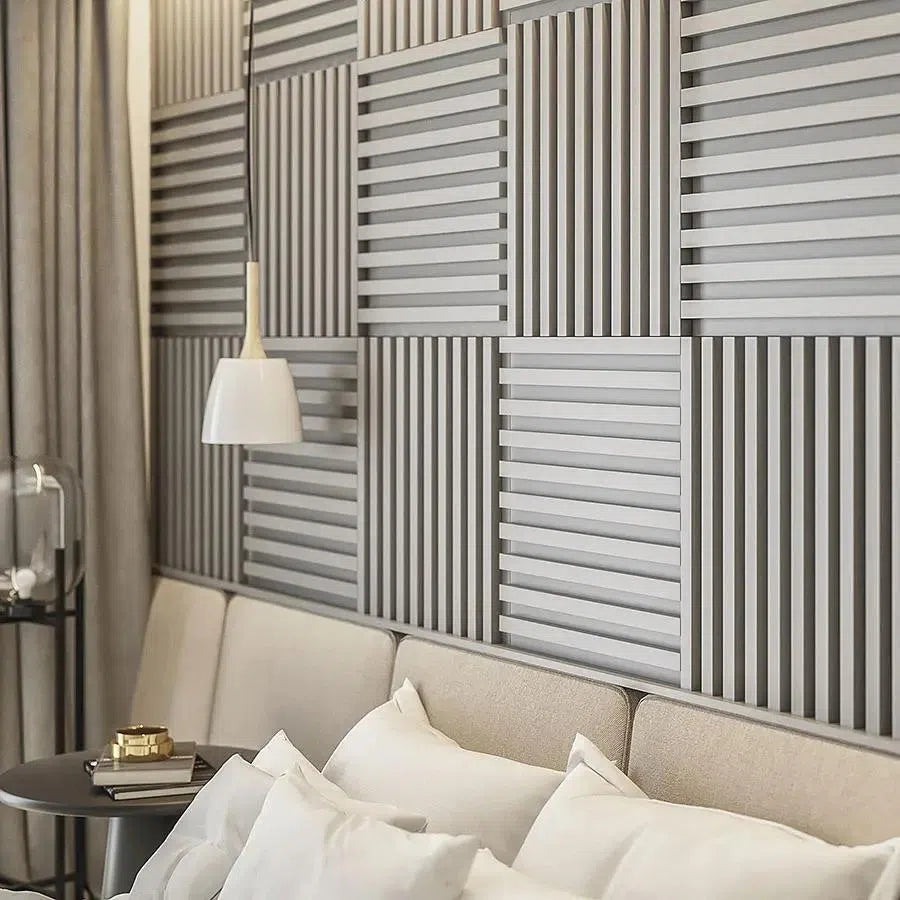
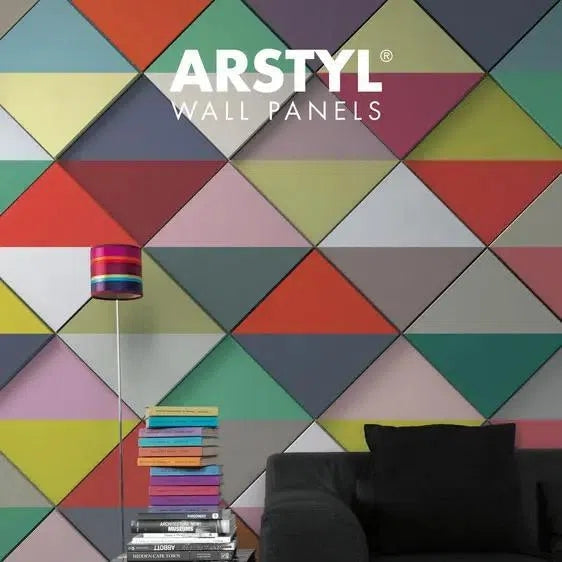
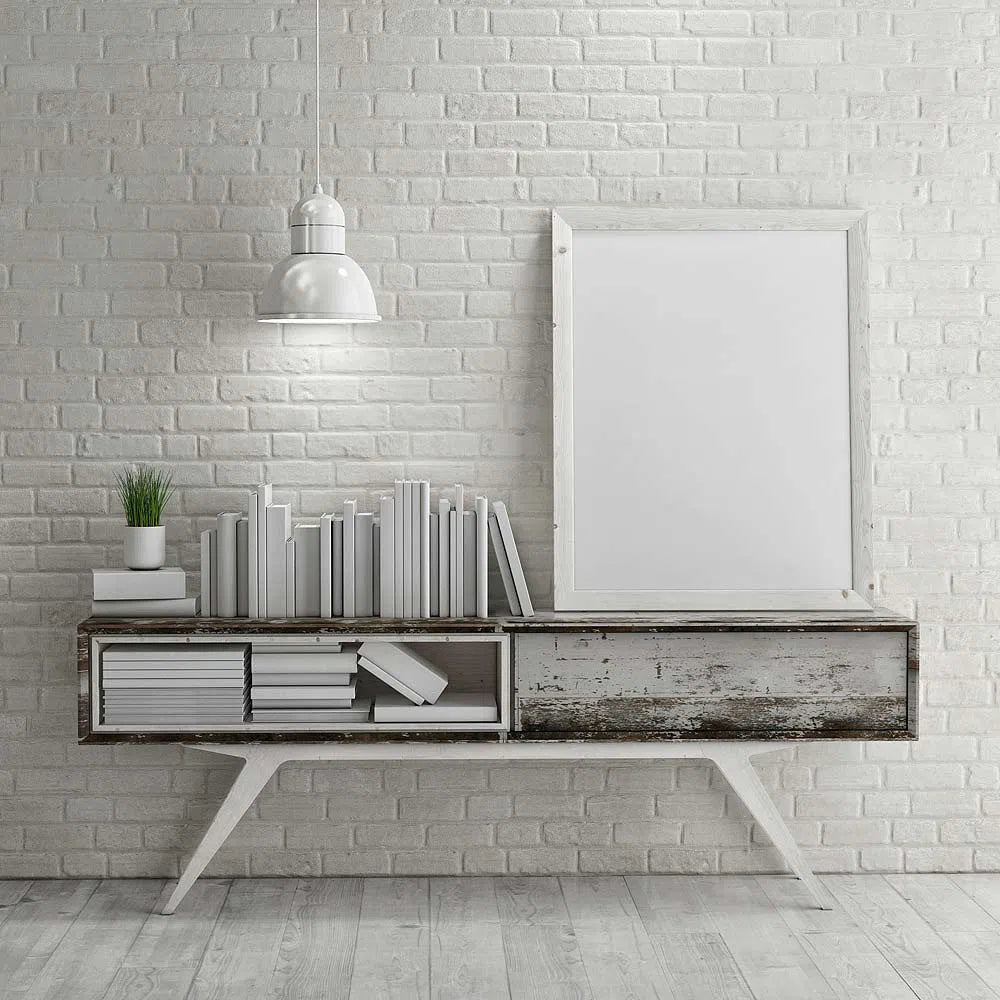
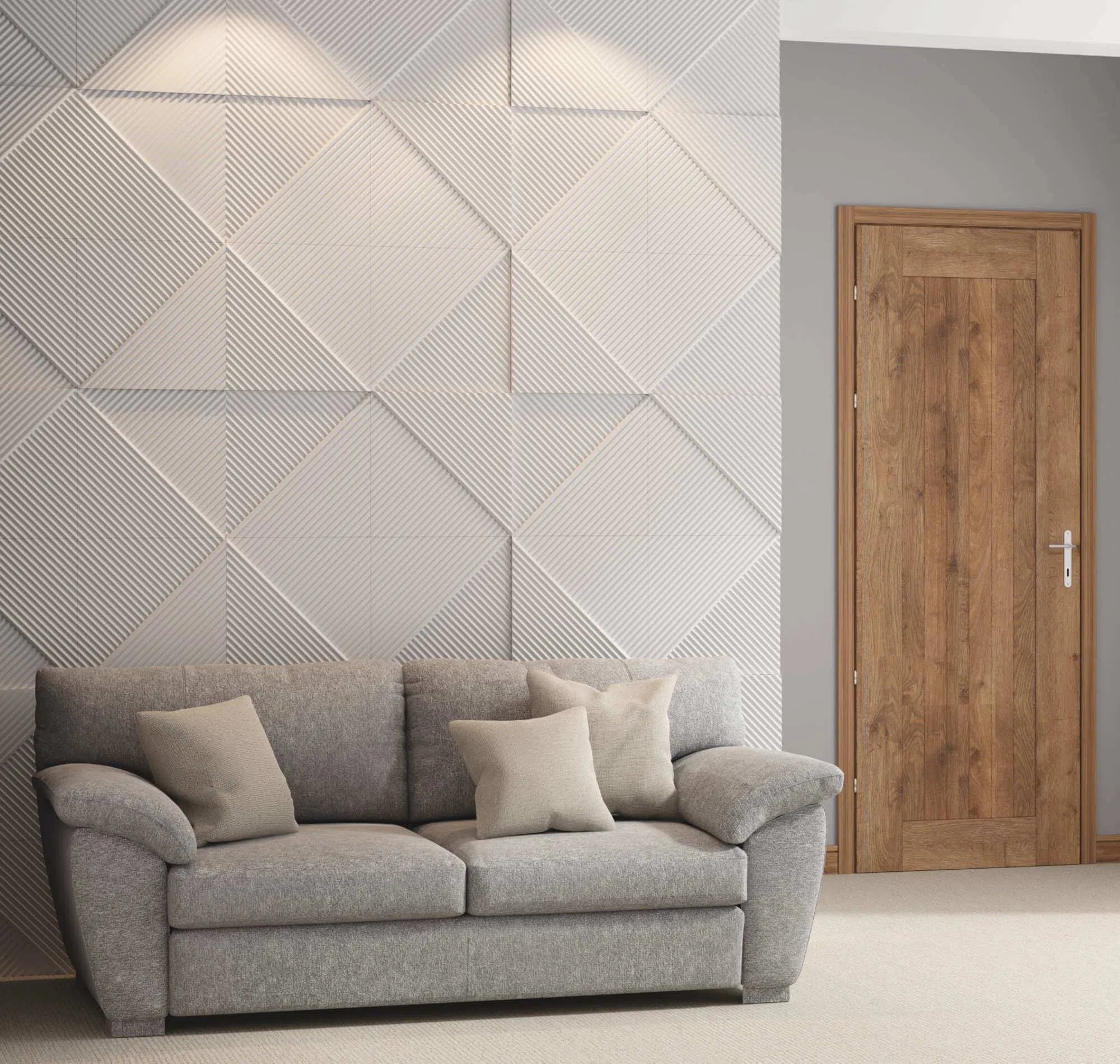
CANELÉ L Arstyl wall panels offer a paintable grooved surface when you want the wall colour to lead the design. The polyurethane panel is listed at 2,000 × 300 × 14.5 mm, with NOËL & MARQUET confirming its primed, ready-to-paint finish. A painted finish lets you relate the relief to the surrounding walls; check the current coating instructions before choosing paint.


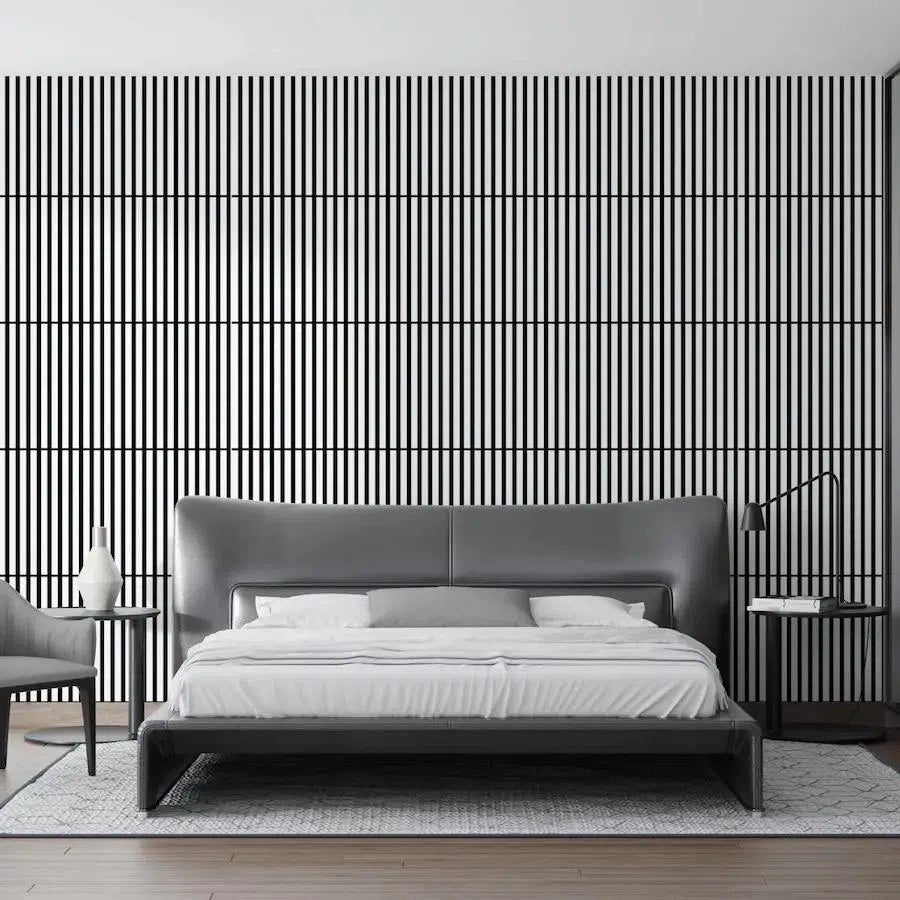
Both choices introduce repeated lines, but their visual effects differ. Walnut makes the grain and darker gaps part of the composition. A single paint colour on CANELÉ L allows light and shadow to define the profile. Compare a physical example with your furniture rather than choosing from a product photograph alone.
Keep the evening view in mind
Assess the backdrop with the television both on and off. View samples in daylight, then under the lamps you normally use in the evening. A strong side light can make relief appear more pronounced; an already busy wall may need less decorative lighting around it.
Keep the number of competing finishes manageable. If the floor, cabinet and panels each have a prominent grain, try simplifying one element. Repeat a colour from the wall in a cushion or small accessory rather than adding another large area of pattern.
Resolve the practical details first
Decorative panelling is a surface finish. The television, cabinet and shelves need their own suitable support and fixings. Have the wall construction and mounting plan checked before covering the surface, and follow the equipment and panel manufacturers' instructions.
Plan access to connections and equipment before fitting begins. Include the finished panel depth, adhesive build-up, exposed ends and junctions with skirting in the drawing. A tidy edge and an accessible installation are more useful than hiding everything behind a permanently closed decorative surface.
Frequently asked questions
Should media wall panels extend beyond the cabinet?
They can, but it is a design choice rather than a fixed rule. Test a flush alignment and a wider backdrop on a measured drawing, then compare them from your main seats.
Can I attach the TV bracket to decorative panels?
The bracket needs appropriate fixings into a suitable supporting structure. Do not rely on the decorative panels to carry the television's weight.
Do I need to panel the whole TV wall?
No. A central section or offset strip can create a clear focal point, especially where the room already contains patterned furnishings or several wood finishes.
Bring the plan together
Set the screen position, draw the furniture and resolve the edges before choosing the final surface. Browse our wood slat wall panels and 3D decorative wall panels to compare the two approaches.


